Product · Runs
Runs that finish
A run is written down step by step. A machine going away, a deployment or a restart continues it from its last saved point; a call it already made is never made twice. What happened can be read afterwards — by a person, or by the agent that built it.
Recorded as it goes
The call is deterministic: what was sent, what came back, and whether it was repeated are recorded, and a continued run consumes the record instead of asking again. The data is not — a far end or a model answers what it answers, and the script treats it as input. A sandbox run with a trace keeps every request as sent and every attempt's answer for 7 days.
Reading a run in the docs →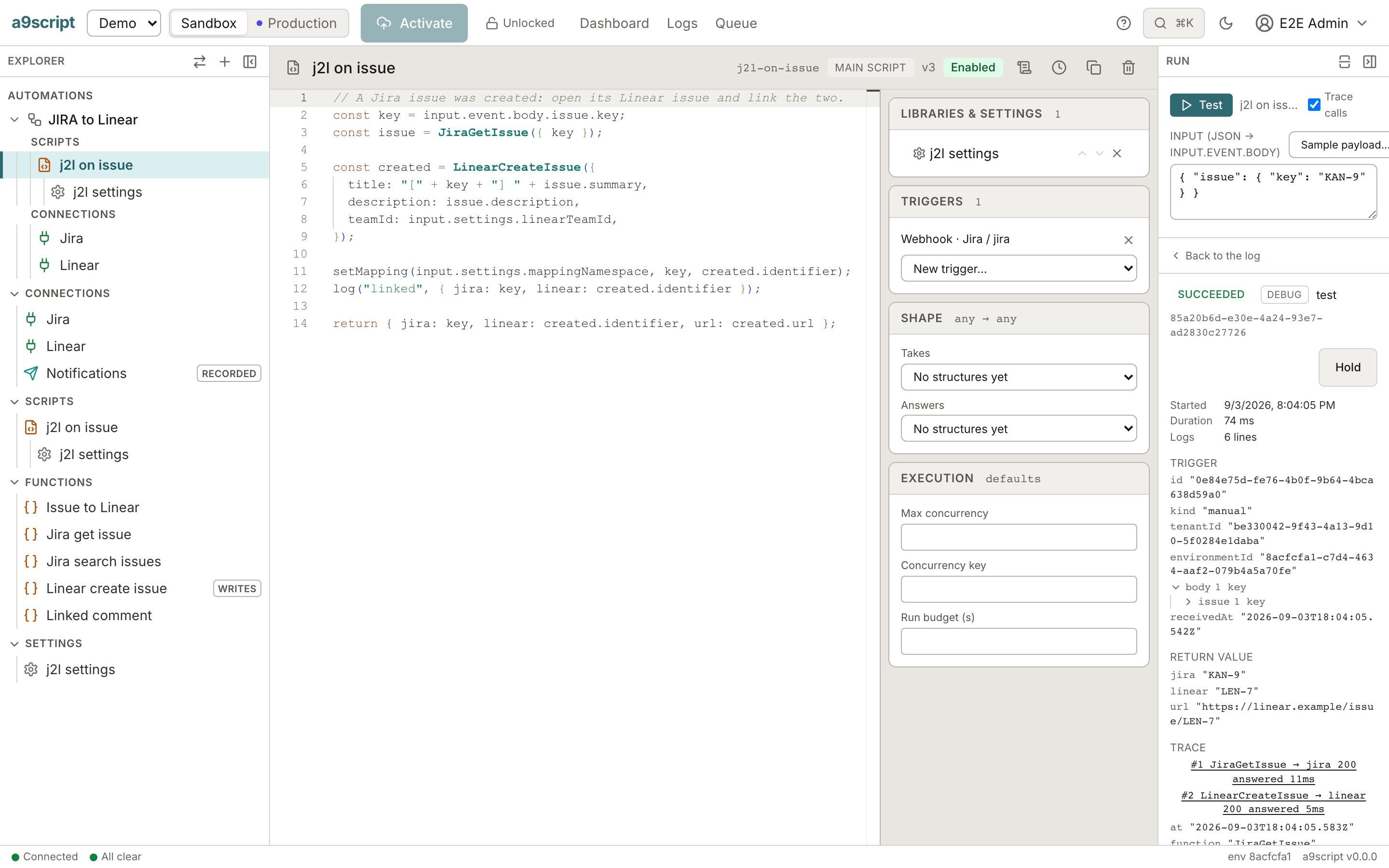
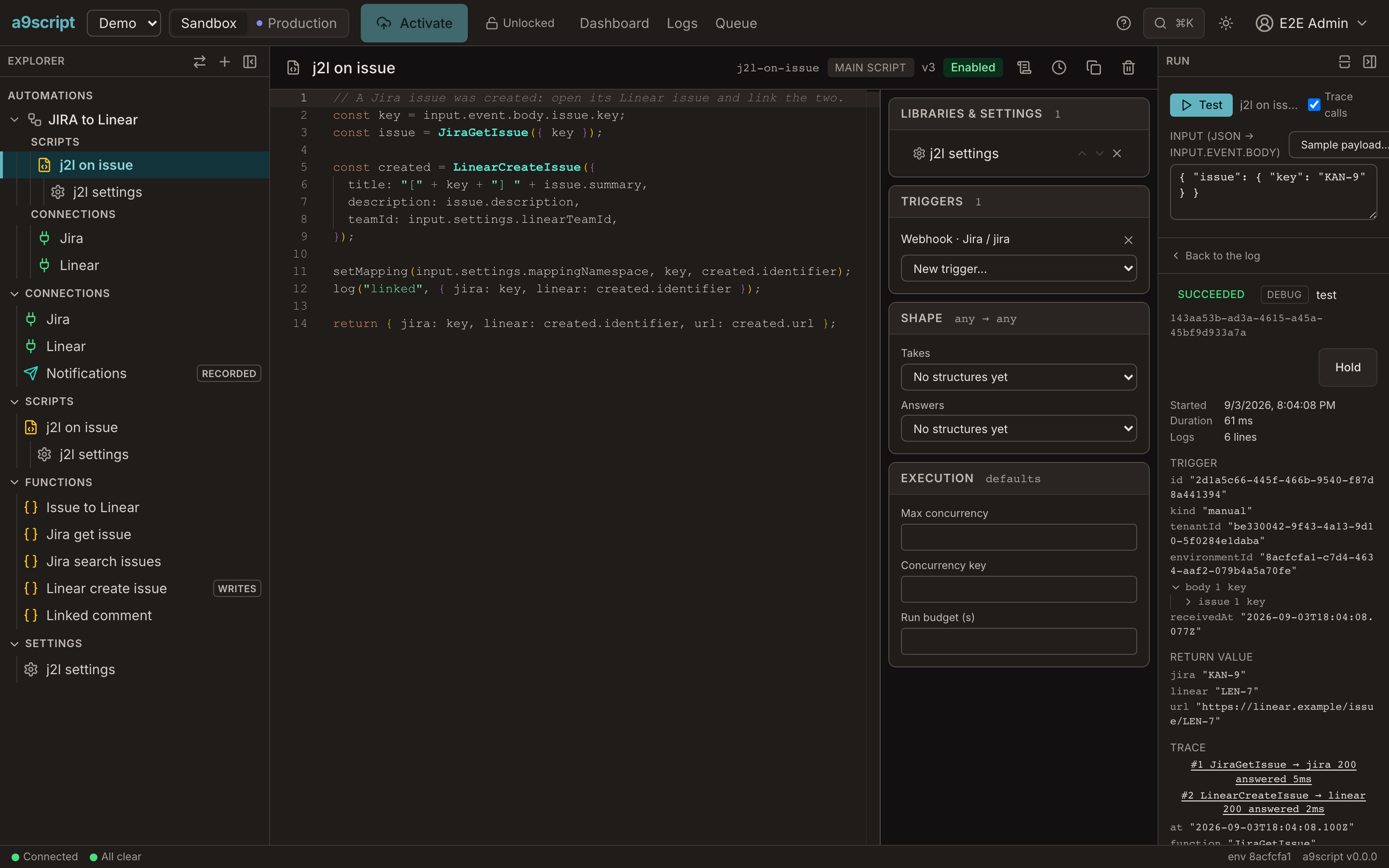
A throttle is a pause
When a far end says not now, the run is parked for the time it asked and continues on its own, holding nothing open — a night job that meets a rate limit at two in the morning is finished by three. A stepped sandbox run parks after every external call instead, so a person or an agent can read the values your variables held and decide to continue or stop.
Every limit a run has, in the docs →Sandbox and production, sealed off
Nothing in one reaches the other except a promotion you perform yourself. Production says so in colour, and activating or deleting there asks first, naming where you are. Sandbox and production are alike by your own design, which is why building in one and running in the other works.
Promoting in the docs →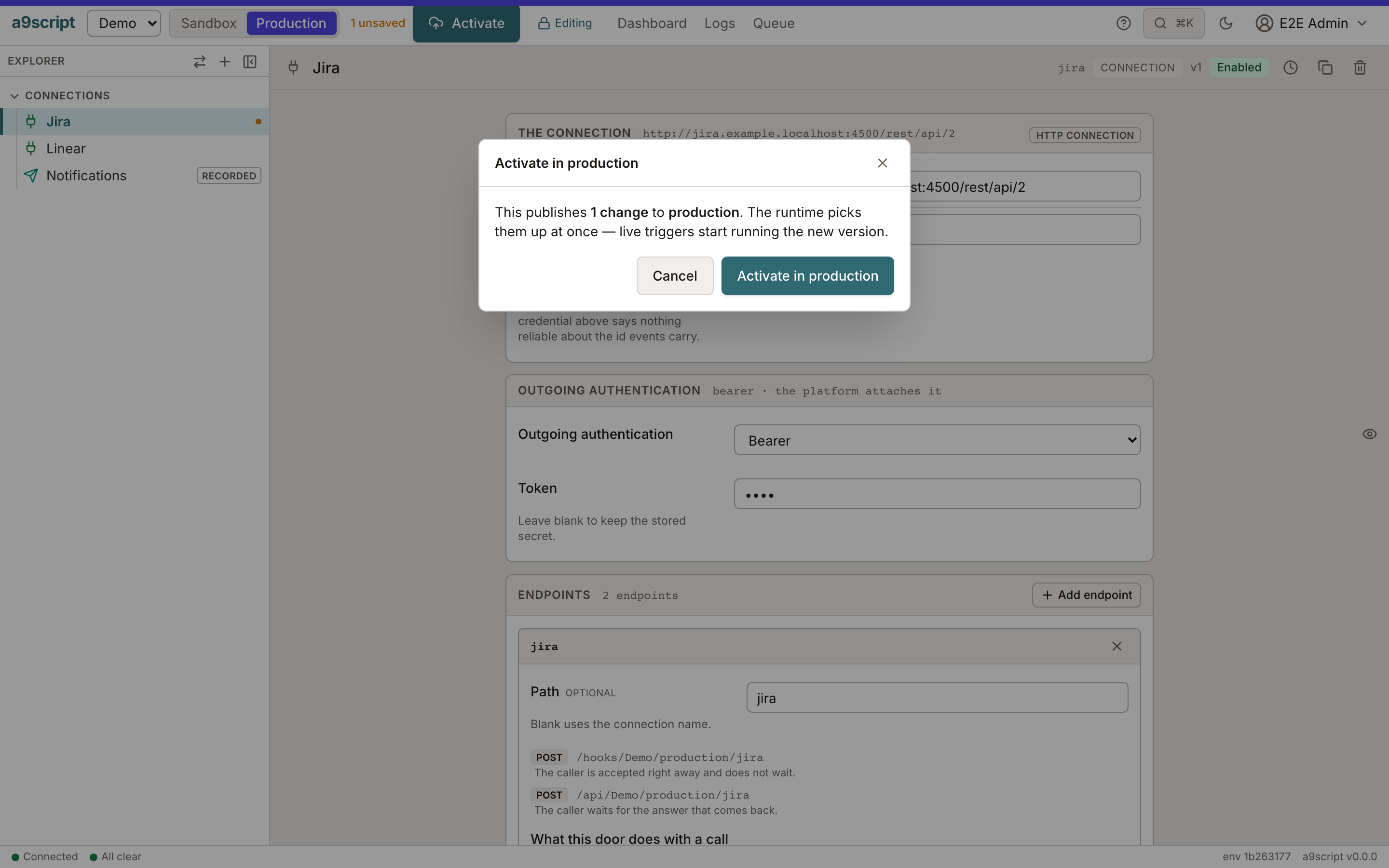
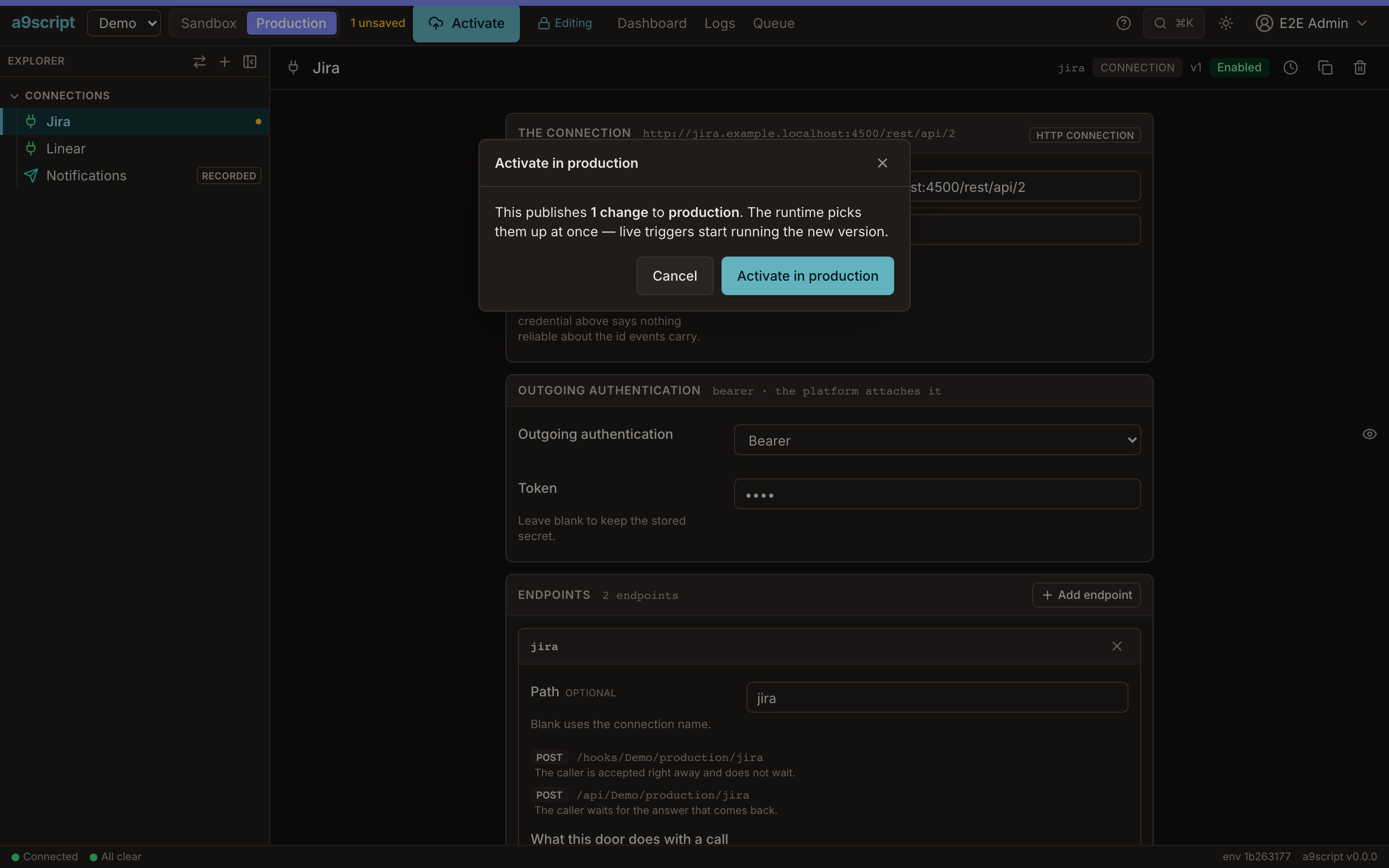
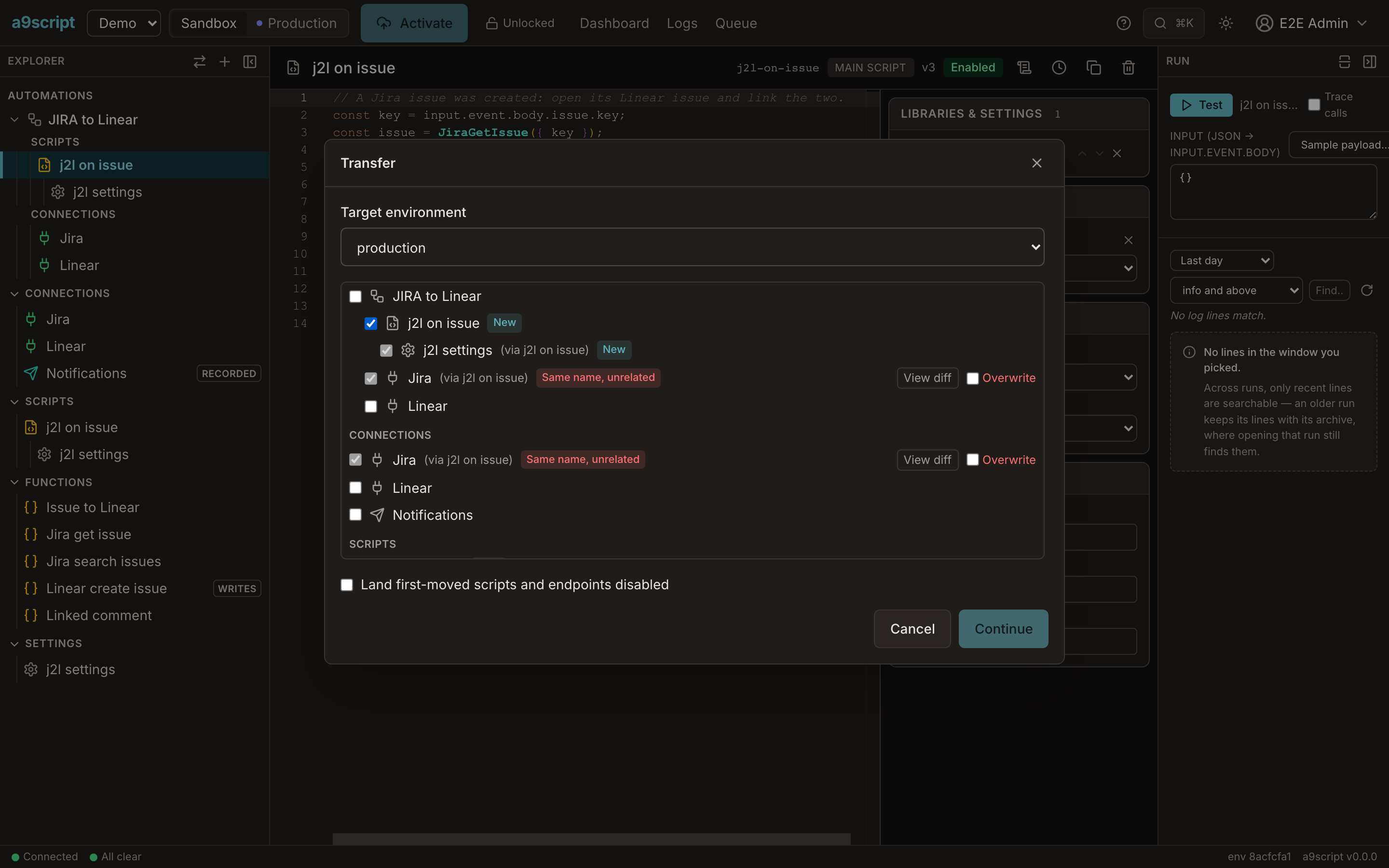
Promote with a plan you read first
A promotion shows one row per entity — new, update, up to date, changed in the target — with dependencies resolved by name. A credential never crosses: the target keeps its own. Every Activate is a numbered version with history, diff, blame and restore.
Going back in the docs →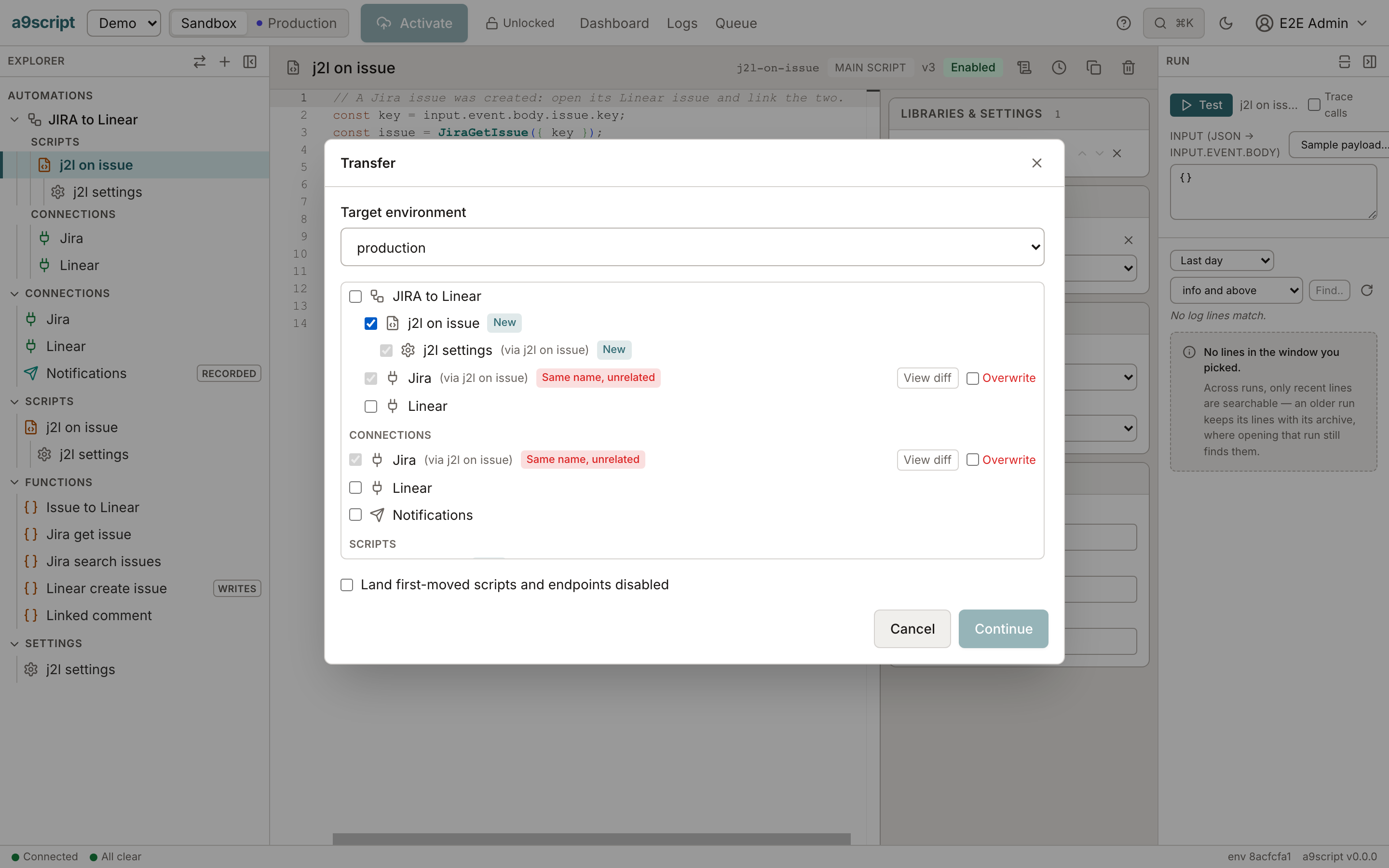
Red until somebody looks
A failed run turns its script red, and red stays until a person acknowledges it — the night's one failure is not gone by morning because the next run succeeded. A notification rule mails you, throttled, with the count of what it swallowed; a system trigger starts a script of your own about it. One log per script, searched across its runs, with the run behind any line one click away.
Reacting to failures in the docs →